


Mainland vs Free Zone vs QFC in Qatar, and How to Choose
In Qatar, the choice between mainland and free zone mostly follows your activity and your customers. A contracting firm or shop with clients across the country registers on the mainland, with the Ministry of Commerce and Industry. A re-export warehouse near Hamad Port belongs in a free zone, and a research start-up at QSTP. Finance and professional firms look at the QFC.
The three routes at a glance
- Mainland, Qatar Free Zones (with QSTP) and the QFC
- 3 routes
- Foreign ownership in the free zones and the QFC
- 100%
- Tax on profits: the foreign share on the mainland, locally sourced profits in the QFC
- 10%
- QFZ tax holiday, renewable by Council of Ministers decision
- 20 years
From the company law, Law No. 34 of 2005, Law No. 36 of 2005 and the QFC; see the sources at the end of the page.
Business setup in Qatar, free zone vs mainland vs QFC
Business setup in Qatar looks different in a free zone and on the mainland. The table puts the two side by side, with QSTP and the QFC.
| Mainland (MOCI) | Qatar Free Zones (QFZ) | Qatar Science and Technology Park (QSTP) | Qatar Financial Centre (QFC) | |
|---|---|---|---|---|
| Licensed by | Ministry of Commerce and Industry, on the Single Window | Qatar Free Zones Authority | The QSTP Board | QFC Authority; QFC Regulatory Authority for financial services |
| Activities | Those on the commercial register, with any regulator’s approval | Logistics and trading, industry, emerging technologies, diamonds and precious stones, maritime | Research, product development, technical training and technical advice | Six non-regulated clusters, such as professional services and head offices, plus regulated financial services |
| Your customers | Across Qatar | Regional and export trade; goods sold into Qatar pay duty | Research and technology work | Financial and professional services clients |
| Premises | A site approved by the Ministry before the lease is signed | Land, warehouses or offices in Ras Bufontas (by the airport) or Umm Alhoul (by the port); rent set in the application | Serviced offices of 45 m², or tech buildings from 500 m² | A registered office in QFC-approved premises |
| Foreign ownership | Up to 100% by application above 49% (see the note below) | 100% | 100% | Up to 100% |
| Tax | 10% of taxable income; the Qatari and GCC share is exempt | Outside income tax for 20 years, renewable | Exempt for zone activities; a return is still filed | 10% on locally sourced profits; a 0% rate for some firms |
| Customs | Normal duty on imports | No duty into the zone; goods sold into Qatar pay duty | Goods sold into Qatar pay duty | Normal duty on imports |
| Legal system | Qatari law, in Arabic | Qatari law with the zone’s own regulations | Qatari law with QSTP’s own regulations | Common law, with its own courts and rules |
| Ongoing | Renew the CR and permit for one to five years; a tax return every year | Under the zone’s own rules | Start activity within six months; a tax return every year | A yearly licence fee and a QFC tax return |
| Government fees | About QAR 1,700 to 2,200 for a full Single Window setup | Not published; an application fee, rent agreed in the application | Not published | USD 500 application, USD 5,000 a year for one activity |
Which is better, mainland or free zone?
There is no winner in general. A Doha trading firm whose buyers are all local would answer one way, a re-exporter at Umm Alhoul another.
Trading and services in Qatar
Shops, contracting, consultancy and most services for local customers: the mainland.
Goods for export or re-export
A warehouse by the airport or Hamad Port, or a factory selling abroad, fits the Qatar Free Zones.
R&D and product work
Product development, R&D and technical advice: QSTP.
Finance and head offices
Financial services, professional firms and regional head offices: the QFC.
A free zone or QFC company that sells goods or services into the local market still meets the rules for that market, such as customs duty on goods leaving the zone. If your customers are mainly in Qatar, compare the mainland route first.
What we help with
Choosing the route
Matching your activity and customers to one of the three.
Ownership check
What each route allows for your partners’ nationalities.
Tax and customs
What each route means for income tax and duty.
The application
Single Window, QFZ Investor Portal or the QFC application.
Premises
An office, warehouse or plot that your route will accept.
Visas
Work visas for staff, and family visas, after the licence is issued.
Read more about each route
 Mainland company
- Licensed by
- Ministry of Commerce and Industry
- Usual form
- LLC (WLL)
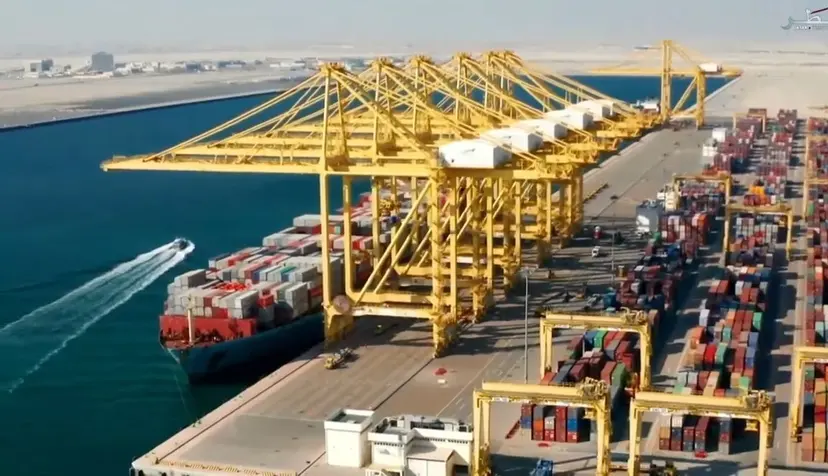 Free zone or QSTP
- Licensed by
- QFZ Authority or the QSTP Board
- Usual form
- LLC or branch
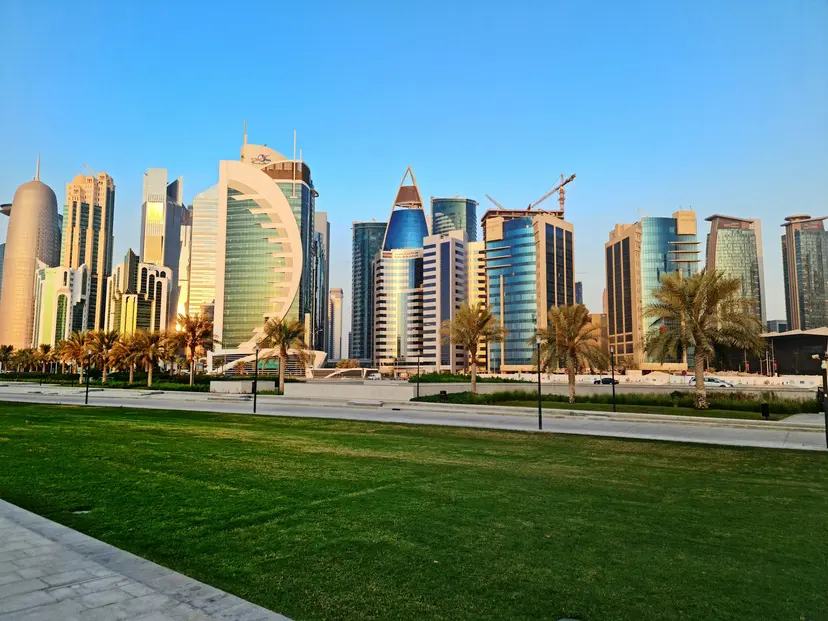 QFC company
- Licensed by
- QFC Authority
- Usual form
- LLC
Related services
Common questions about choosing a route in Qatar
What is the difference between mainland and free zone in Qatar?
Mostly who licenses you and where you can sell. The Ministry of Commerce and Industry licenses mainland companies, which trade across Qatar. The Qatar Free Zones Authority licenses zone companies for logistics, industry and technology. Those get 100% foreign ownership and a 20-year tax holiday, yet whatever they sell into Qatar pays customs duty, like an import.
Source: Law No. 34 of 2005 on Free Zones, as amended (Qatar Free Zones Authority)
What is a free zone in Qatar?
Qatar has two kinds. Under Law No. 34 of 2005, the Qatar Free Zones Authority runs Ras Bufontas, next to Hamad International Airport, and Umm Alhoul, next to Hamad Port; a company there can be wholly foreign-owned and bring goods into the zone free of duty. QSTP is a separate zone for research and technology, licensed by its own Board.
Source: Qatar Free Zones Authority, FAQ
Can I work on the mainland with a free zone licence?
Only within limits. Goods that leave the zone for a buyer elsewhere in Qatar count as imports and pay customs duty; a container sent from an Umm Alhoul warehouse to a shop in Doha would pay it. The licence also covers only the activities listed on it, so mostly local businesses usually start with a mainland company.
Source: Qatar Free Zones Authority, FAQ
Do QFC companies pay tax?
Yes. The QFC applies 10% corporate tax on locally sourced profits, with no personal income tax. Some firms, such as investment managers and businesses at least 90% owned by Qataris, can use a 0% concessionary rate under conditions. QFC companies register with the QFC Tax Department.
Can a foreigner own 100% of a company in Qatar?
In the Qatar Free Zones and the QFC, yes. On the mainland, Law No. 1 of 2019 lets a foreign investor go up to 100% if the Ministry approves the part above 49%, though not in banking, insurance or commercial agencies. A Ministry web page still quotes 51% as the general rule, which is why we ask a lawyer to look at each case.
Source: Law No. 1 of 2019 on investment of non-Qatari capital (Al Meezan)
Is a free zone cheaper than the mainland in Qatar?
We can only compare what is published. On the Single Window, government fees for a full mainland setup come to about QAR 1,700 to 2,200. The QFC asks USD 500 with the application and USD 5,000 a year for one activity. QFZ and QSTP publish no fee list, and QFZ rent is agreed during the application.
Source: Single Window, Start your business (establishment service)
Should a startup choose the QFC or the Qatar Free Zones?
Start from what the startup will do. The QFC licenses financial and professional services and head offices; the Qatar Free Zones take logistics, trading, industry and emerging technologies; QSTP takes research, product development, and technical training and advice. If you will sell mostly to customers across Qatar, look at the mainland first.
Did not find your question? Ask an adviser. We reply with what applies to your case.
Sources
Official sources for the facts on this page, last checked 19 Oct 2026.
- Law No. 1 of 2019 on investment of non-Qatari capital (Al Meezan)
- Commercial Companies Law No. 11 of 2015, as amended (Al Meezan)
- Ministry of Commerce and Industry, Investment steps for foreign investors
- Invest Qatar, Setting up your business in Qatar (guide hosted by MOCI)
- Single Window, Start your business (establishment service)
- Law No. 34 of 2005 on Free Zones, as amended (Qatar Free Zones Authority)
- Qatar Free Zones Authority, FAQ
- Qatar Free Zones Authority, Set up a new company
- Law No. 36 of 2005 establishing the QSTP free zone (QSTP)
- QSTP Free Zone Tax Guidelines (Dec 2021)
- Qatar Financial Centre
- Qatar Financial Centre, Set up
- Qatar Financial Centre, Non-regulated activities
- Qatar Financial Centre, Digital, AI and technology (setup and fees)
- Qatar Financial Centre, Tax overview
Send us your activity, where your buyers are and the owners’ nationalities.
We tell you which route fits and what its application needs.