
Media City Qatar is the body set up by Law No. 13 of 2019 to license and regulate media companies that work in it. It licenses production, broadcasting, publishing, gaming, digital media and advertising businesses, with no cap on foreign ownership and a 20-year tax exemption running from 2019. Applications start on its website. Fees are not published.
What Media City Qatar is
Law No. 13 of 2019 created a city called “the Media City” (المدينة الإعلامية). It reports to the Prime Minister, has its own legal personality and budget, and its boundaries are set by a Council of Ministers decision. Its stated aims are to manage and develop media activity and to draw in international media, technology companies, and research and training bodies in media and digital media.
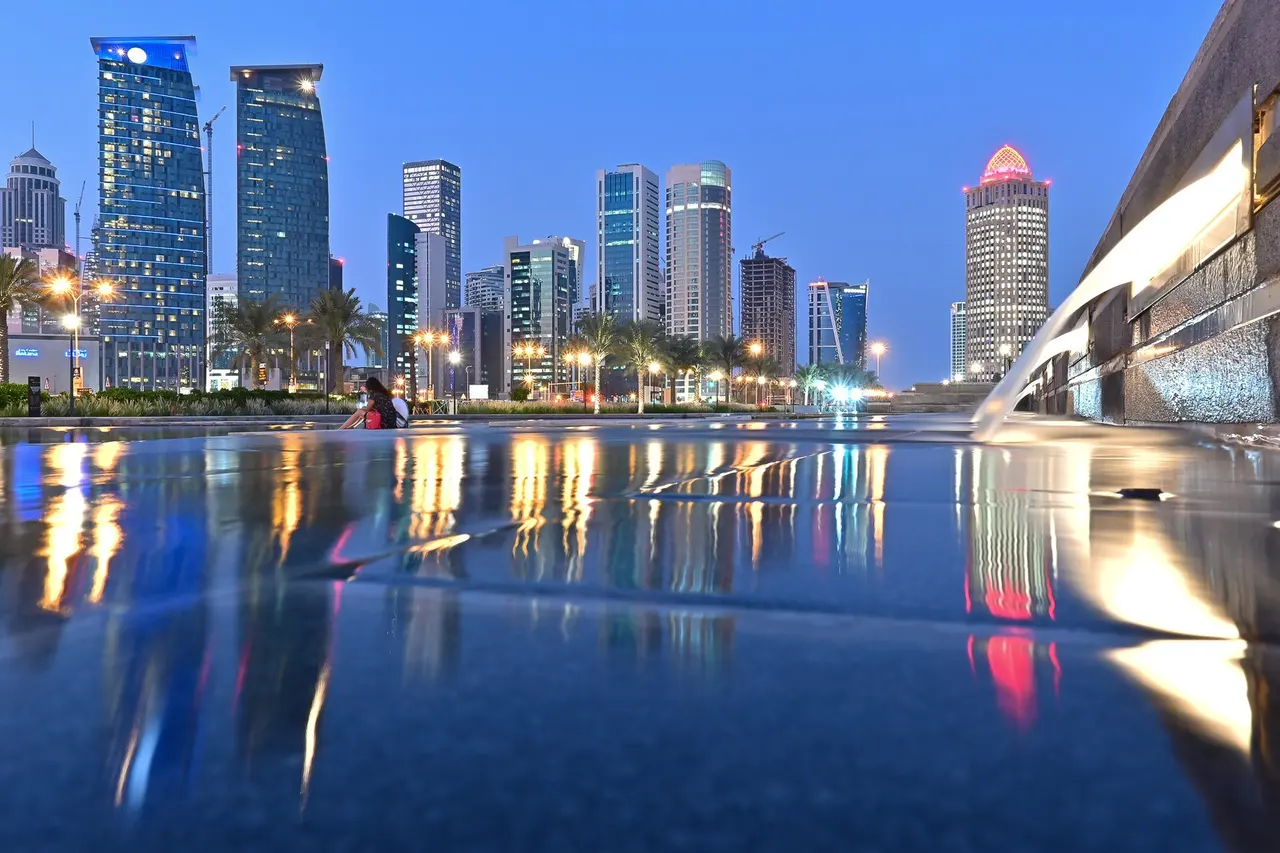
The law is both a licensing law and a set of incentives. Media City grants the licences, permits and approvals for anyone who wants to work in it, regulates activity there, and checks that licensed companies follow its rules. Its offices are in Msheireb Downtown Doha.
- Establishes Media City; in force since June 2019
- Law No. 13 of 2019
- On the non-Qatari share of capital (Art. 6)
- No cap
- Tax exemption from the law’s start, renewable (Art. 8)
- 20 years
From Law No. 13 of 2019 on Al Meezan (Arabic text), checked 21 Oct 2026. Media City’s FAQ calls it Decree No. 13; Al Meezan lists it as a law.
Who can apply
Under Article 6, LLCs, participation contracts and other kinds of companies or entities may be set up or licensed in Media City. They may be owned by one or more natural or legal persons, whether Qatari citizens, residents or anyone else, without the limits other laws place on the non-Qatari share of capital. The application form on Media City’s site offers three business types: a new company, a branch of an existing company, or other.
The activity must be media. Article 5 lists what may be carried on in the city, from producing and maintaining media content and databases to publishing newspapers, magazines and books, media services over the internet, advertising, media-related e-commerce, rights management, and importing and storing media equipment. Media City groups its tenants in four focus areas.
Screen, broadcast and music
Studios, producers, broadcasters, creators, music companies and production houses.
Tech, digital and social
Media tech companies, publishers, streaming services, podcast networks, news organisations and social media platforms.
Gaming and interactive
Game developers and publishers, esports organisations and interactive studios.
Agencies and support services
Marketing and creative agencies, media training providers, event companies and production service specialists.
Media City licence types
Media City does not publish a list of licence categories, and we found no licensing regulations on its site. What the law itself names is set out below.
| What the law says | Article |
|---|---|
| Media City grants licences, permits and approvals to persons, companies and other entities that want to work in it | Art. 3(1) |
| These include television and radio broadcasting licences, and licences to publish and distribute newspapers, magazines and books | Art. 3(1) |
| No activity may be carried on in the city without its licence | Art. 4 |
| The Board sets the licensing and classification rules; the chief executive approves every licence and certificate | Arts. 23(8), 29(9) |
| A licensed company needs no other licence, approval, permit or registration in Qatar for that work | Art. 19 |
Media City’s own pages speak of “licensing and permits” for media companies and content creators, with permits and content guidelines handled through a one-stop shop. Its step-by-step guide adds that it gives guidance on any specific requirements for your activity, so ask which licence and permits your plan needs before you commit to a structure.
Media City, QFZ or QSTP
| Media City Qatar | Qatar Free Zones (QFZ) | QSTP | |
|---|---|---|---|
| Law | Law No. 13 of 2019 | Law No. 34 of 2005 | Law No. 36 of 2005 |
| Licensed by | Media City; the chief executive approves licences | Qatar Free Zones Authority | The QSTP Board, after pre-approval |
| Made for | Media: production, broadcasting, publishing, gaming, digital media, advertising | Logistics and trading, industrial and consumer, emerging technologies, diamonds, maritime | Research and development, product development, technical training and advice |
| Foreign ownership | No cap on the non-Qatari share | 100% | Up to 100% non-Qatari |
| Tax | No income tax or other direct or indirect taxes for 20 years from June 2019, renewable | No income tax or other direct or indirect taxes for 20 years, renewable | Exempt for zone activities if substance rules are met; a return is still filed |
| Customs | No duty on goods imported into the city or exported abroad by licensed companies | No duty into the zone or on exports; local sales pay duty | No duty on project imports; goods into Qatar pay duty |
| Published fees | Not published | Not published | Not published |
The activity usually decides it. A production house, a publisher or a games studio fits Media City. A company building media technology through research and product development can look at QSTP as well. QFZ does not list media among its sectors. If the business will mostly sell to clients across Qatar, compare a mainland company too.
Steps to apply
- Define the activity
Set out what the company will do, for which markets, how it will earn, and the scale you will start at. This becomes the business description in the application.
- Prepare a business plan and portfolio
Media City asks applicants to show their capability: a short business plan, a portfolio or samples of work, and profiles of the founders or key team.
- Submit the form online
On the start-a-business page: name and contact details, business name and type, and the plan or portfolio as a PDF of up to 2 MB.
- Review and licence
Media City reviews the application. Once approved, it moves to licensing, with support on the commercial registration and on any requirement linked to your activity.
- Choose a workspace
Coworking areas or private offices, with production studios being developed, as Media City’s guide describes.
- Visas and staff
Residence for staff working in the city and their families is set by a decision of the Minister of Interior (Art. 20). Media City lists visa assistance and labour law guidance among its services.
Once licensed, a company can apply for Media City’s incentives. The Qatar Screen Incentive, run with the Film Committee, is open only to Qatari entities, including special purpose vehicles, licensed by Media City. The Gaming Incentive is open to entities licensed by Media City. Both are assessed on qualifying spend under their own guidelines, and an application does not guarantee approval.
Renewal
Media City does not publish the length of a licence or the renewal fee. The law shows that licences are renewed: Article 31 lists fees for issuing and renewing licences and permits among Media City’s income. Several other rules apply for as long as the licence runs.
Suspension or cancellation
Only for breach of the law, its regulations or the licence conditions, by decision of the chief executive (Art. 13).
Grievance within 15 days
The company may appeal to the Board within 15 days of being told. The Board gives a reasoned decision within a month; silence means refusal, and its decision is final (Art. 13).
No transfer without consent
A licence may not be assigned to anyone else without the Board’s prior written approval (Art. 18).
Information on request
Licensed companies give Media City any data it asks for to check they are meeting their obligations (Art. 37).
Ask Media City for the licence term and the renewal fee in writing when your licence is issued, and put the expiry date in the same calendar as your residence permits.
How we help
We help you check whether your activity fits Media City, QSTP, QFZ or the mainland, prepare the business plan and the application documents, and guide you through each stage after Media City replies. Media City decides every application.